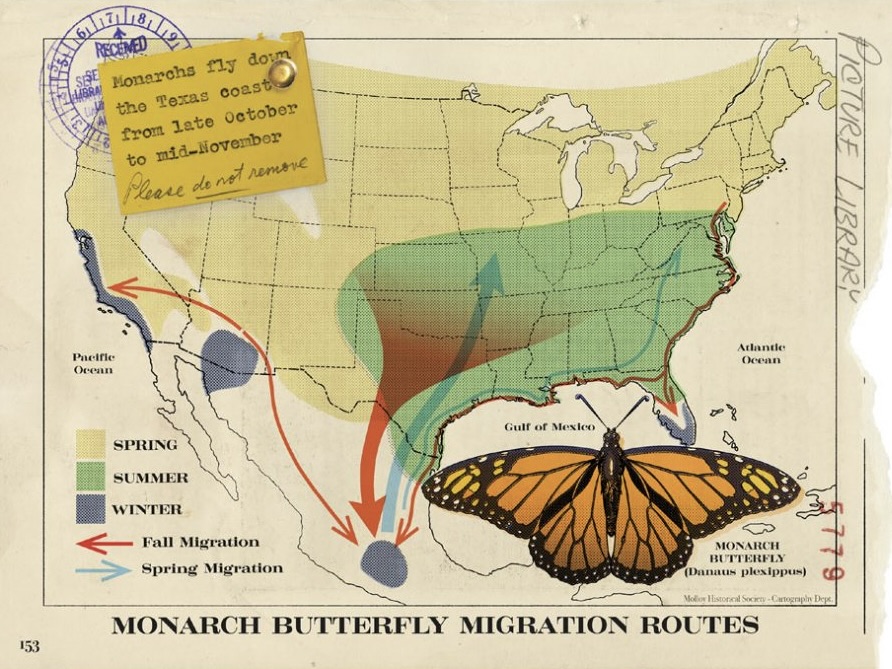
Monarch butterflies are iconic orange-and-black insects known for their incredible annual migration, spanning thousands of miles between North America and central Mexico.


Migration

Monarch butterflies are iconic Among all species, the monarch butterfly’s migration stands out as a biological wonder. Each year, millions of monarchs embark on an extraordinary journey spanning thousands of miles across North America. As autumn approaches, monarchs from Canada and the northern United States begin traveling southward, guided by an innate compass that directs them toward the high mountain forests of central Mexico. There, they cluster by the thousands on oyamel fir trees, forming shimmering orange-and-black blankets that protect them from cold temperatures.
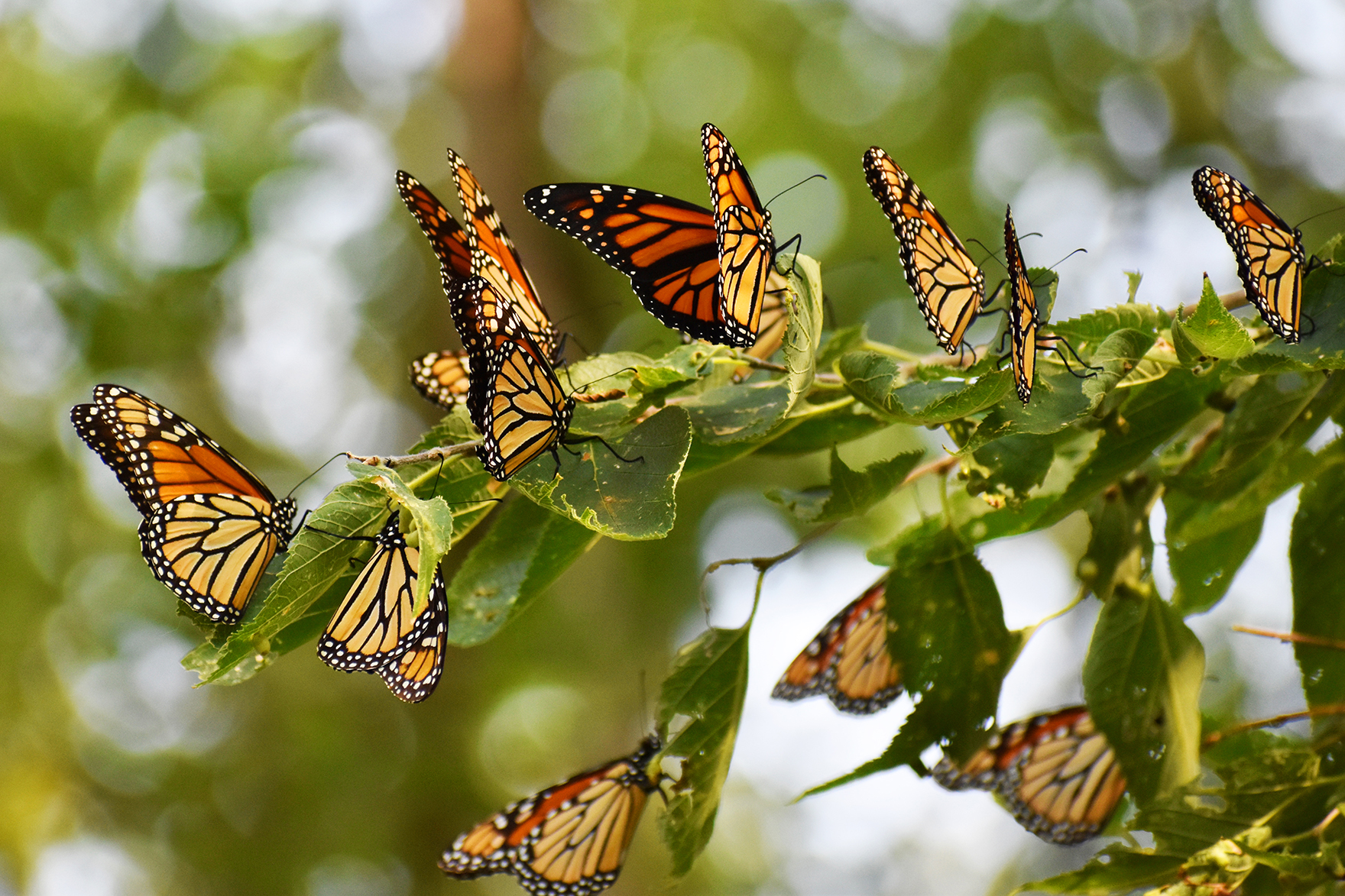

Map of monarch migration routes

What makes this migration even more astounding is that no single butterfly completes the round trip; it takes several generations to return north in the spring. Each new generation continues the path laid out by its ancestors, instinctively following environmental cues such as the angle of the sun and changes in temperature. While monarchs are the most famous travelers, other butterfly species, like the painted lady and the cloudless sulfur, also migrate long distances in search of suitable climates and food sources. However, habitat loss, pesticide use, and climate change are threatening these delicate travelers, making the study and conservation of butterfly migration crucial for maintaining ecological balance and the beauty of our natural world.